

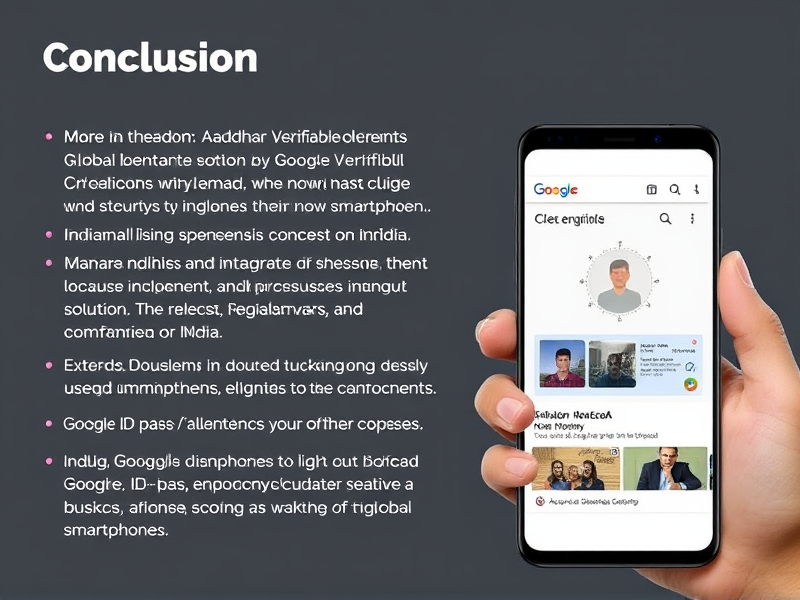
Google has enhanced the digital identity features of Google Wallet, adding support for Aadhaar Verifiable Credentials in India and expanding its ID pass feature to Singapore, Taiwan, and Brazil. These developments underscore Google’s effort to promote a practical and privacy-friendly alternative to traditional physical documents across various markets.
Aadhaar integration and partner ecosystem in India
Collaborating with the Unique Identification Authority of India (UIDAI), Google now allows Indian consumers to store their Aadhaar Verifiable Credentials directly within Google Wallet on their devices. This integration enables users to verify their identity for everyday services without presenting physical documents, with only relevant data points shared selectively.
At the launch, five partner organizations are participating in this integration. The cinema chain PVR INOX will use these credentials for age verification and loyalty rewards. BharatMatrimony will leverage them to verify users on verified profiles. Visa application service Atlys will automatically fill international visa forms using these credentials. Residential access platform Mygate and home services marketplace Snabbit are expected to integrate this capability for verifying delivery and service personnel, though their integrations are still forthcoming.
The Aadhaar system is integral to identity verification in a significant portion of India’s population, making its inclusion in a widely used mobile wallet crucial for the country’s digital infrastructure.
ID passes extended to three new markets
Separately, Google has introduced ID passes to Singapore, Taiwan, and Brazil. These digital credentials are derived from a user’s passport information and stored within Google Wallet. They are intended to support both in-person and online identity or age verification scenarios.
Following their availability in other markets, these expansions indicate that Google is applying consistent identity standards across different geographies. The company’s approach emphasizes global interoperability and privacy-by-design principles, with selective disclosure playing a key role here as well.
The combination of on-device storage and selective disclosure aligns with emerging regulatory and standards-based frameworks for digital identity, including those being developed across the EU and in several Asia-Pacific markets. Google has not specified a timeline for further country rollouts beyond those announced.