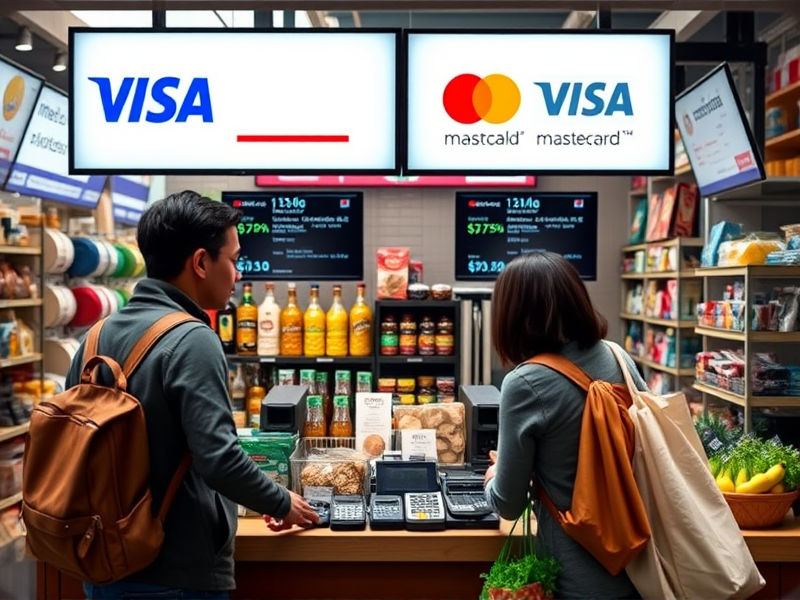
Merchants are contending with Visa and Mastercard over the card companies’ perceived high swipe fees. Both firms have proposed a settlement of $38 billion, which they believe addresses issues related to alleged excessive charges for credit card acceptance.
Following a judge’s rejection of an earlier agreement worth $30 billion due to its deemed inadequacy, Visa and Mastercard are now seeking approval for the revised settlement. This new accord aims to conclude decades-long litigation involving businesses that accused Visa, Mastercard, and banks of violating US antitrust laws through their swipe fee structures. Swipe fees, or interchange fees, reached $111.2 billion in 2024, four times higher than in 2009, according to the National Retail Federation.
Opposition from Merchants
The National Retail Federation and the Merchants Payments Coalition are among those opposing the settlement, arguing that it does not adequately address concerns raised by a New York judge regarding violations of US antitrust laws. They also assert that businesses would still be paying excessively for card acceptance, despite the proposed reforms.
The new agreement suggests reductions in swipe fees to an average rate of 2.25% starting from 2024, with a cap at 1.25% over eight years for standard consumer cards. This reduction could potentially save merchants up to $38 billion by 2031, according to two economic experts hired by the merchant plaintiffs. The settlement also provides more flexibility for merchants in accepting specific types of credit cards and allows them to impose surcharges on card payments.
Visa contends that this settlement offers substantial relief to merchants across various business sizes. Mastercard has highlighted benefits for smaller merchants through the proposed reforms. Overall, proponents claim these measures would save $244 billion, encourage competition, and benefit customers in a non-competitive payment system.
The judge’s previous rejection of the $30 billion deal was based on her view that the proposed 0.07 percentage point reduction in swipe fees and associated savings were insufficient compared to the profits made by Visa and Mastercard. She also criticized the agreement for maintaining the “Honour All Cards” rule, which she believed allowed fees to remain inflated through antitrust violations.