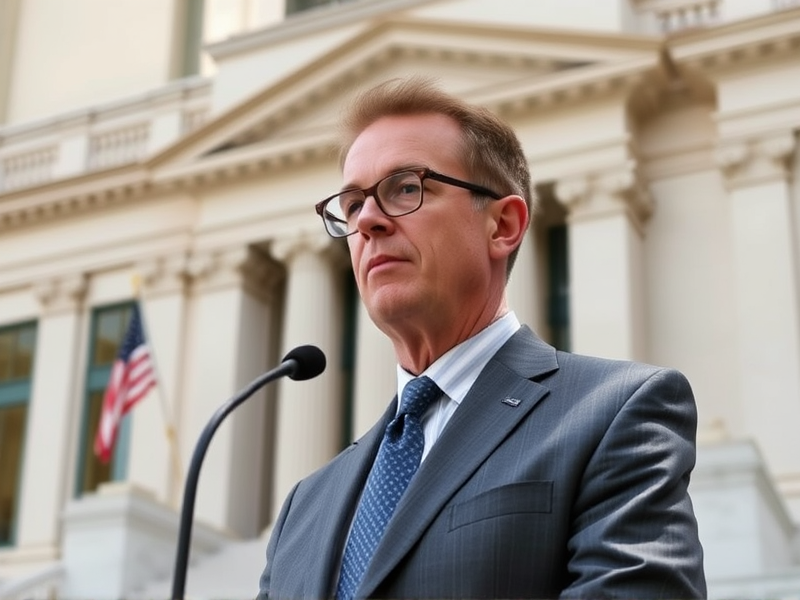
Master accounts with the U.S. Federal Reserve have long been restricted to banks only, but Fed Governor Christopher Waller has proposed a new model that could extend such access to fintech firms.
Eliminating the Workaround
At the Federal Reserve’s inaugural Payments Innovation Conference, Waller suggested that payment services companies might be able to obtain a payment account or a skinny” master account. This would provide them with necessary access while incorporating safeguards like balance caps and no interest on balances.
Looking for a Green Light
The initiative targets fintechs that currently rely on banks’ master accounts to operate payment services. This reliance can become problematic as companies scale, often prompting many to pursue bank charters of their own.
For instance, merchant payments platform Checkout.com recently obtained a bank charter from the state of Georgia in order to directly access U.S. card networks like Visa and Mastercard, allowing it to act as its own acquirer.
Potential Impact
Similarly, digital assets companies such as Ripple and Circle have applied for bank charters with the Federal Reserve in hopes of gaining direct access. Ripple has also sought a master account to hold reserves of its RLUSD stablecoin directly with the Federal Reserve, offering an additional layer of security.
The outcome of these applications remains uncertain, but Waller’s remarks suggest potential positive developments. He emphasized the importance of innovations involving emerging technologies like stablecoins, tokenization, and artificial intelligence and highlighted digital assets’ increasing role in traditional finance.