
Possible EU Involvement for Turkey in SEPA
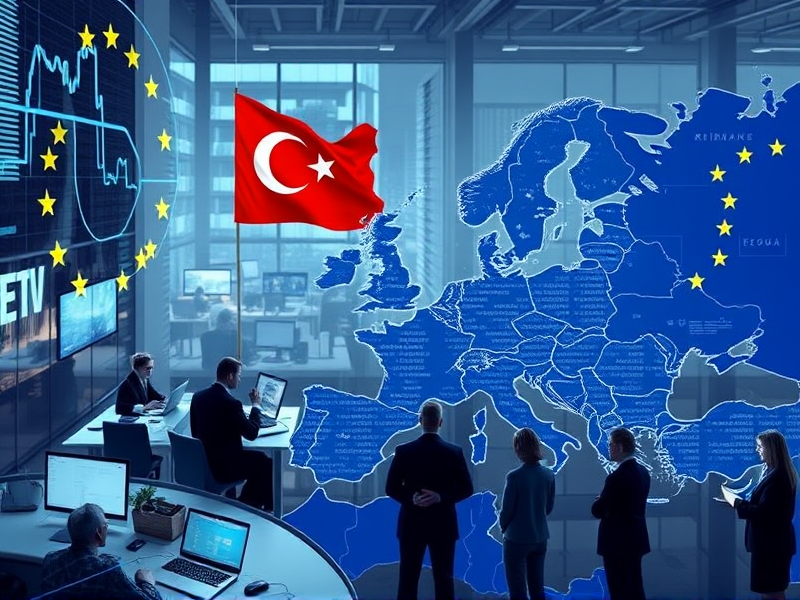
The European Union has extended an invitation to Turkey regarding participation in the Single Euro Payments Area (SEPA), though Ankara’s response is pending.
An EU representative suggested that joining could deepen economic integration with Europe, facilitating and reducing costs for cross-border money transfers. Over the last year, several non-EU countries—Albania, Moldova, Montenegro, and North Macedonia—joined SEPA, bringing the total number of participating nations to 41.
According to Reuters, EU officials proposed the idea during meetings with Turkey’s foreign minister in Ankara last month.
“SEPA could offer an opportunity for Turkey to strengthen its economic ties as a candidate member and a key partner of the European Union,” Chargé d’Affaires Jurgis Vilcinskas pointed out.
Potential Challenges
However, several hurdles may impede Turkey’s acceptance. As already Turkey’s largest trading partner with over €200 billion in trade, EU accession has been under discussion since 2005, suggesting that progress might be slow and steady.
One challenge is regulatory alignment. Turkey would need to conform to EU directives on payment services, such as the Payment Services Directive, which entails stricter anti-money laundering measures and enhanced data protection standards. The European Commission has offered support for this process.
Local concerns also arise over how these changes might impact various sectors of the domestic economy.
“Turkish banks may lose some fee income from foreign transactions,” Hugh Thomas, Lead Analyst at Javelin Strategy & Research, noted. “They could be less enthusiastic about joining SEPA if this is a regulatory requirement.”
Future Prospects
Despite these obstacles, Turkey has not outright dismissed the proposal. The lengthy EU accession talks indicate that progress on SEPA might take time.
“The integration efforts with the European Union are unlikely to be fast-moving,” Thomas concluded. “This is probably more of the same.”
Turkey’s payments infrastructure is already among the world’s most advanced, according to Visa’s 2026 Financial Services Research, with a high usage rate of contactless payments and QR codes.