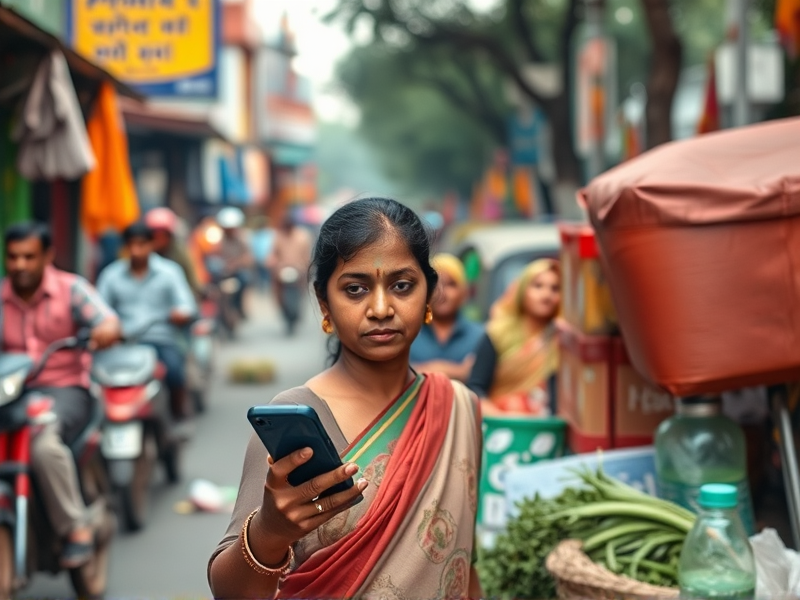
India has turned to its local digital payments network to enhance access to credit, with the goal of enabling banks to provide short-term loans in a safer and more efficient manner.
As part of this initiative, India is encouraging banks, borrowers, and financial institutions to utilize the national digital payment system for loan transactions. This move aims to extend credit services to a broader segment of the population that has been traditionally underserved by traditional banking systems.
The National Payments Corporation of India (NPCI), which operates the Unified Payment Interface (UPI), has begun offering its platform to banks for issuing short-term loans to small enterprises such as vegetable vendors and street food vendors. This infrastructure is integrated into the government’s digital ecosystem, India Stack, designed to enable individuals to prove their identity, access benefits, and conduct financial transactions through mobile devices.
Detailed Information on the Initiative
According to reports from the Financial Times, bank account ownership in India has surged to 89% by 2024, up significantly from 53% a decade ago. However, 16% of these accounts are not active, compared to an average of 4% in other low- and middle-income countries.
Currently, UPI’s usage is predominantly for everyday transactions and money transfers, but its role as a lending tool remains underdeveloped across the country. To address this gap, banks can now link credit facilities to users’ UPI applications, including loans secured by collateral such as gold, property, fixed deposits, shares, and mutual funds.
Starting from late August 2025, these funds can be used for various purposes like paying merchants, transferring money between individuals, or withdrawing cash. Since credit services through UPI are still in their nascent stages, banks will need to upgrade their systems accordingly.
While the UPI platform is being leveraged by banks to offer loans, underwriting and assessing credit risk will remain a responsibility of individual lenders. The NPCI’s automated clearing house and payment services are expected to facilitate quick collections, significantly reducing collection costs.
Despite these advancements, there have been some concerns voiced. Recent efforts by several Indian states to require street vendors and other cash-based businesses to provide UPI transaction data as part of their tax compliance have sparked resistance from many market vendors in major cities like southern Bengaluru, who are now declining UPI transactions.