
Gobi Partners, a venture capital firm focused on Asia, has recently announced its investment in Transak, a global payments infrastructure provider facilitating the compliant conversion between fiat currencies and digital assets such as stablecoins.
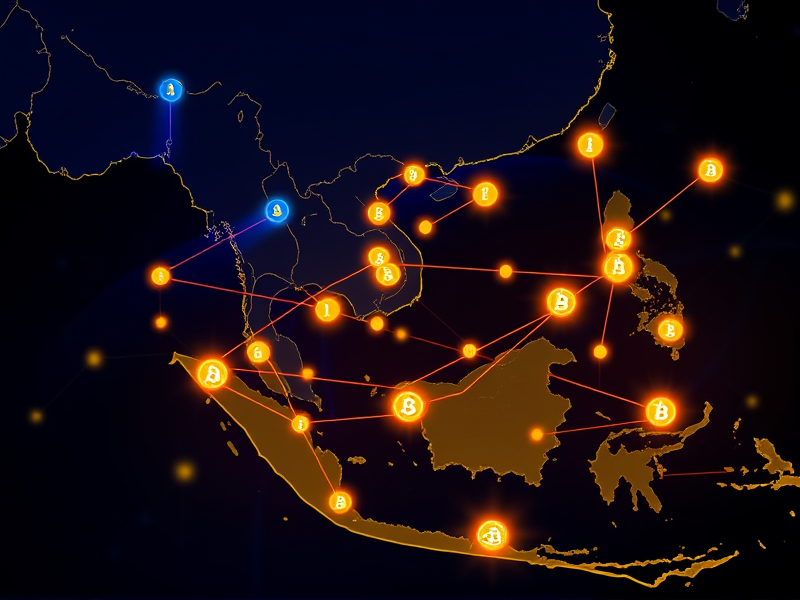
In an official press release, it was mentioned that this investment will aid Transak’s growth across ASEAN and other regions within Asia Pacific. The company has already set up its APAC headquarters in Hong Kong.
Established in 2019, Transak operates a regulated payments layer enabling fintechs and financial institutions to offer bidirectional fiat-to-digital asset conversion through a single API. It handles KYC, AML controls, risk monitoring, licensing, and local payment integrations across over 64 countries. Currently, Transak holds more than 21 regulatory approvals in the US, UK, EU, Australia, Canada, and India, with plans to expand into the Middle East, Latin America, and Asia Pacific.
Scale and product coverage
Transak’s business data indicates that over 600 applications globally are using its platform, providing access to more than 130 digital assets across 45 different blockchains. It supports over ten million users via bank transfers, card payments, local payment methods, and stablecoins.
The investment is seen by Gobi as a reflection of the increasing role of regulated digital asset payment systems in cross-border transactions, remittances, and financial services as stablecoin adoption ramps up. For platforms seeking to scale, compliance infrastructure, licensing, and risk management are viewed as essential operating requirements rather than differentiators.
Commenting on the deal, Jamaludin Bujang, Managing Partner of Gobi Partners, stated that Transak has developed a platform addressing regulatory complexity at scale. He emphasized it serves as a bridge between traditional financial systems and digital asset networks. Sami Start, Co-founder and CEO of Transak, noted that the Gobi investment will help bring their infrastructure to Asia, where the stablecoin market is substantial.