

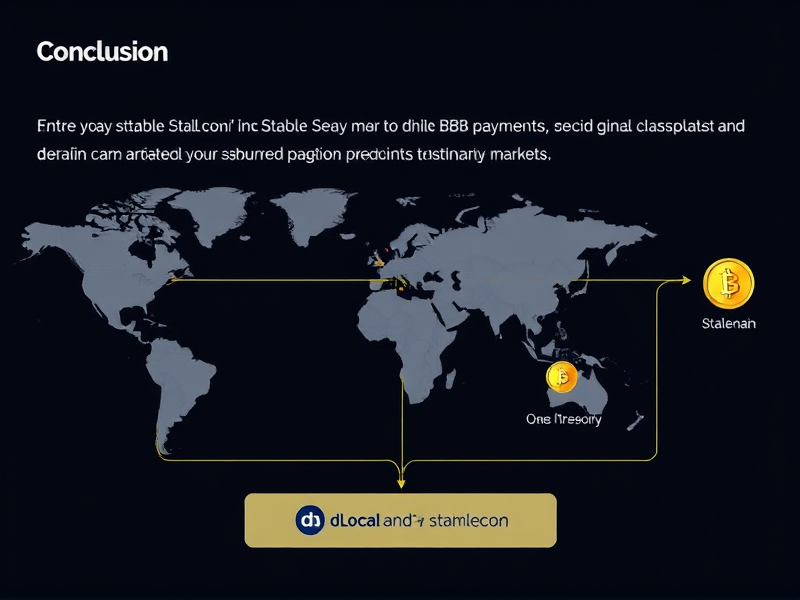
dLocal and Stable Sea have partnered to facilitate B2B cross-border payments via stablecoins in both emerging and developed markets.
The collaboration between dLocal and Stable Sea aims to provide businesses with a stablecoin-powered infrastructure for international B2B payments. This partnership links Stable Sea’s stablecoin networks to dLocal’s extensive local payment network, covering over 40 countries. The goal is to offer treasury departments an alternative pathway beyond traditional correspondent banking.
Overcoming persistent inefficiencies in cross-border B2B payments
It is reported that global B2B cross-border payments amount to over USD 35 trillion annually. However, a considerable portion of this volume continues to traverse through legacy infrastructure rooted in correspondent banking systems. This poses several challenges for treasury departments including extended settlement periods, the need for excessive liquidity reserves, limited real-time visibility during payment transit, and prolonged foreign exchange exposure.
The partnership between dLocal and Stable Sea is designed to tackle these issues. It allows Stable Sea Business users to direct large cross-border payments through stablecoin channels while leveraging dLocal’s local payout services for final settlement in the destination market. This integration seeks to shorten settlement times, lower upfront funding requirements, and enhance clarity for finance teams handling multi-currency operations.
Combining stablecoins with local payment infrastructure
By integrating with Stable Sea’s stablecoin settlement mechanism, the partnership expands dLocal’s capabilities into institutional and corporate treasury processes rather than consumer remittances. A spokesperson from Stable Sea highlighted that the objective is to merge stablecoin rails with robust local payment systems to deliver faster and more predictable global settlements. A representative from dLocal emphasized that this arrangement brings their deep market expertise in local payments into the realm of stablecoin-enabled transactions.
This move aligns with a broader industry trend where stablecoins are increasingly being viewed as settlement layers for high-value corporate payments, not just retail or speculative instruments. The integration of regulatory-compliant local payout infrastructure with stablecoins addresses a critical gap in enterprise adoption of digital asset-based settlements: ensuring reliable delivery into local banking systems.