
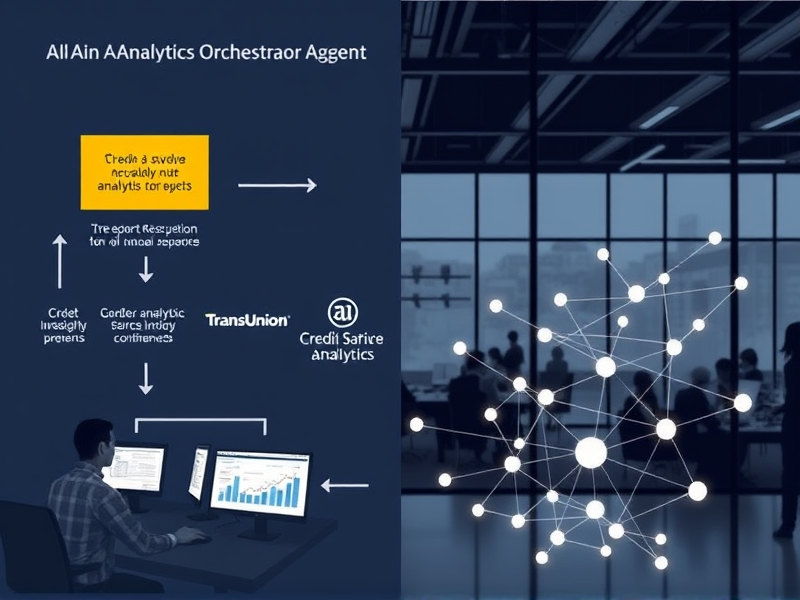
TransUnion has introduced an AI Analytics Orchestrator Agent, leveraging its OneTru platform and integrating Google’s Gemini models to expedite credit analytics processes.
Subsequently, TransUnion unveiled the AI Analytics Orchestrator Agent as part of the OneTru solution enablement ecosystem. This agent is designed to enhance and automate credit analytics for financial services clients using Gemini models.
The new tool is a key component of TransUnion’s TruIQ suite, aiming to streamline analytical workflows by translating natural-language queries into executable processes that can significantly reduce the time from weeks to mere hours or minutes. Currently, it is being utilized by internal data scientists and is set for broader release in the forthcoming months.
From Query to Execution
The agent operates by breaking down user prompts into actionable steps, mapping these steps into code, and providing clear reasoning. This method ensures accessibility of internal logic for non-technical users while supporting essential auditability and explainability features crucial in regulated sectors like financial services.
It is integrated with TransUnion’s enterprise conversational data catalogue and a semantic knowledge graph metadata layer, enabling better understanding of credit concepts and data relationships. This infrastructure supports governed attribute retrieval and enhances the accuracy of concept mapping during analysis.
By embedding Google Cloud’s Vertex AI platform and Gemini models within OneTru, TransUnion aims to create an environment where complex analytics can be made actionable without requiring direct data science support from end-users. A representative from Google Cloud highlighted that this integration demonstrates how specialized domain AI solutions can be swiftly developed using the Vertex AI framework.
Future Plans and Market Context
TransUnion intends to broaden the agent’s library of reusable analytical workflows throughout 2026, scaling it across multiple markets and use cases. While a specific commercial availability date for external clients is not disclosed yet, deployment is anticipated within the coming months.
This launch aligns with financial services firms’ growing desire to utilize AI-assisted tools to cut operational costs and enhance access to advanced analytics without significantly increasing data science personnel. For credit bureaus and analytics providers, providing self-service analytics while maintaining governance and auditability standards marks a significant shift in the distribution of analytic value.