
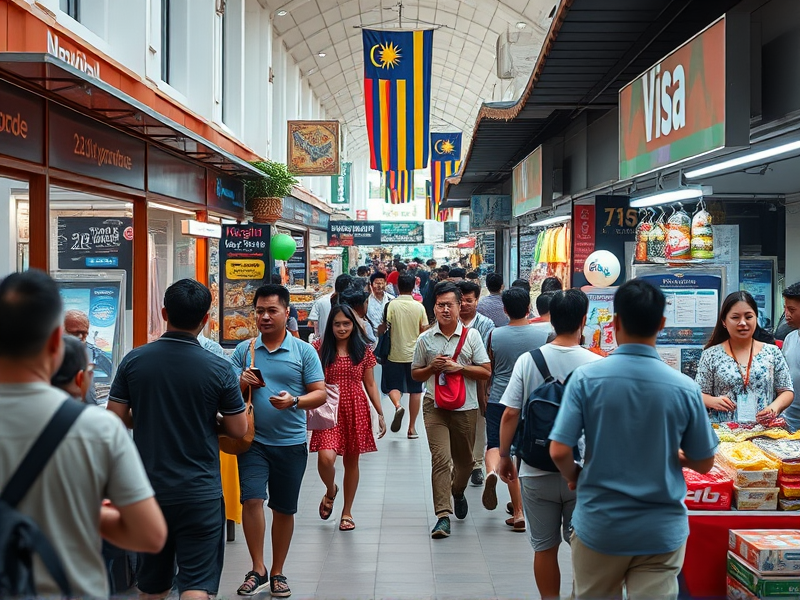
According to research published by Visa, real-time payments enjoy a 96% acceptance rate among Malaysian merchants. They account for 27% of in-store transactions.
On February 4, 2026, Visa released the whitepaper titled “Strengthening Southeast Asia’s Real-time Payments: Security, Trust and New Pathways to Financial Access“. The study surveyed small and medium enterprises (SMEs) and consumers in Southeast Asia about their payment preferences, operational challenges, and security concerns.
A significant 38% of SMEs prefer real-time payments for receiving customer funds. However, 42% of consumers and over one-third of SMEs have reservations about fraud, scams, or misdirected payments in real-time transactions. Card payments, including credit, debit, and prepaid cards, still top the charts at 34% of in-store SME transactions in Malaysia.
Operational Challenges Impede Adoption
68% of Malaysian SMEs cite operational difficulties such as payment failures, declined transactions, and reconciliation issues. Additionally, 66% experience customer delays during checkout or requests for unsupported payment methods. About half of the merchants who do not accept cards report losing sales from both domestic and international customers due to limited payment options.
For cross-border transactions, fewer than 15% of consumers chose real-time payments for their most recent overseas purchase, mainly because of security concerns and transaction irreversibility. 35% of consumers are wary about data privacy and cybersecurity issues despite nearly half of them using real-time payments for everyday purchases.
Malaysian consumers consider debit and credit cards to offer faster settlements and better security compared to real-time payments, with gaps exceeding 10 percentage points on factors like customer familiarity and checkout speed.
Visa’s Fraud Detection Infrastructure
Visa’s account-to-account payment solution suite employs adaptive behavioral analytics and AI-driven risk intelligence for fraud detection. A UK pilot identified over half of the fraudulent real-time payment transactions that existing systems had missed. The solution operates in Argentina with a 73% fraud capture rate.
The platform offers unified risk visibility across participating financial institutions and uses machine learning models to analyze transaction patterns. Real-time payments are processed within seconds, making them irrevocable. This necessitates pre-transaction fraud prevention rather than post-settlement dispute resolution.
Visa is rolling out QR Connector and Scan to Pay services, linking QR-based transactions to its global network for international acceptance. Visa Pay enhances contactless functionality for e-wallet users worldwide, while Visa Accept lets merchants accept digital payments on smart devices without dedicated point-of-sale terminals.
Malaysia anticipates 47 million international visitors during Visit Malaysia 2026, emphasizing the need for cross-border payment interoperability in tourism commerce. ASEAN digital interoperability initiatives aim to connect national real-time payment systems across member states.
Real-time payment systems in Southeast Asia include Malaysia’s DuitNow, Singapore’s PayNow, Thailand’s PromptPay, and Indonesia’s BI-FAST. These systems facilitate instant account-to-account transfers using mobile numbers or national identification numbers as payment identifiers.