India and the European Union Agree to a Landmark Deal
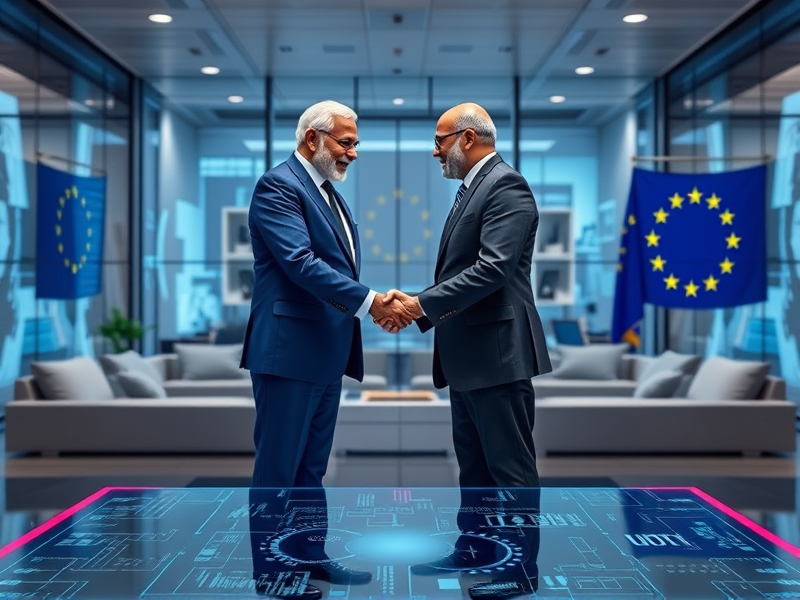
After years of discussion, India and the European Union have reached an agreement aimed at eliminating tariffs and taxes, integrating supply chains, and enhancing manufacturing capabilities across both regions.
The financial services sector is a cornerstone of this Free Trade Agreement (FTA). The deal includes efforts toward payments interoperability, such as real-time cross-border payments and remittances.
Both economies are working to build a stable, long-term economic integration that benefits both parties. According to the Associated Press, trade between India and the EU was around $136.5 billion from 2024 to 2025. With the FTA in place, they hope to boost trade to approximately $200 billion by 2030.
Calling for Stronger Infrastructure
Beyond immediate opportunities for payments providers, the agreement allows both regions to leverage each other’s strengths. Notably, India leads in real-time payments through its Unified Payments Interface (UPI).
The FTA builds on a prior agreement by the European Central Bank (ECB) linking TARGET Instant Payment Settlement with UPI. The deal also calls for broader collaboration on fintech initiatives, including compliance, artificial intelligence, and potentially central bank digital currencies (CBDCs).
The debate over the digital euro has been ongoing as EU member states weigh efficiency gains against privacy concerns. However, recent developments have positioned it increasingly as a cornerstone of EU payments autonomy.
ECB Executive Board Member Piero Cipollone emphasizes the need for a payments infrastructure built entirely on European technology amid growing concerns about U.S. dollar-backed stablecoins and expanding cross-border payment networks from Visa and Mastercard.
Responding to Entrenchment
Against the backdrop of entrenched U.S. technology and currency, and a more assertive U.S. trade stance, the FTA represents both a strategic response and opportunity. It could have significant economic implications for nearly two billion people.
According to Indian Prime Minister Narendra Modi, trade between India and the EU already accounts for roughly a quarter of global gross domestic product and around a third of global trade.