
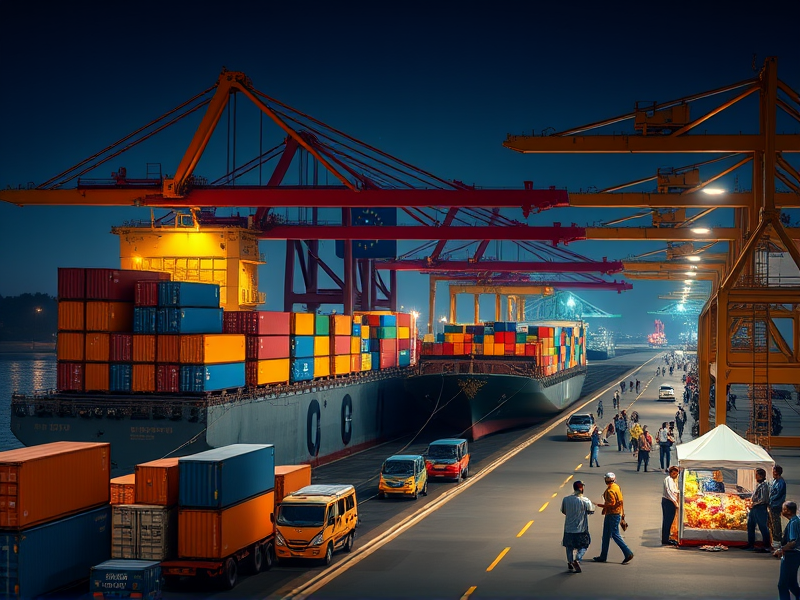
The EU and India have concluded negotiations for a free trade agreement (FTA), which is the largest such deal in recent history.
With this FTA, both regions aim to enhance economic and political cooperation amid rising geopolitical tensions and global economic challenges. This agreement reflects a mutual commitment to open markets and rules-based trade practices.
Key Milestone
Ursula von der Leyen, President of the European Commission, highlighted that this deal strengthens collaboration between two major democracies. She noted that the FTA will benefit both parties economically and pave the way for an even stronger relationship in the future.
Expected Outcomes
Currently, the EU and India engage in annual trade valued at over EUR 180 billion, supporting approximately 800,000 jobs within the European Union. The new FTA is expected to double EU goods exports to India by 2032 by reducing tariffs on 96.6% of EU goods sent to India. This action is projected to save around EUR 4 billion in duties annually for European exporters.
As one of the most extensive trade openings granted by India, this agreement offers significant competitive advantages to EU industrial and agri-food sectors, enabling them to access a market of 1.45 billion people with an annual GDP of EUR 3.4 trillion.
Upcoming Benefits
- Small EU businesses will gain new export opportunities, with the FTA providing dedicated support and information on provisions to SMEs. Tariff reductions and removal of regulatory barriers will also bring about increased transparency, stability, and predictability.
- The agreement decreases tariffs on agri-food products from Europe, opening up a substantial market for EU farmers. However, certain sensitive sectors like beef, chicken meat, rice, and sugar are exempted from this liberalization to protect domestic industries. Indian exports will still need to adhere to EU health and food safety standards.
- EU companies will have preferential access to the Indian services market, particularly in key areas such as financial services and maritime transport. The FTA ensures robust protection of intellectual property rights, encompassing copyrights, trademarks, trade secrets, and plant varieties.
- The deal includes provisions for sustainable development, focusing on environmental protection, climate change mitigation, worker rights, gender equality, and fostering a platform for dialogue and cooperation to ensure effective implementation.
Next Steps
For the EU, the draft texts will soon be published and reviewed. Following legal revisions and translation into all official languages, they will be submitted to the Council for signature and conclusion of the agreement.
Following Council approval, both parties can proceed with signing the agreements. The final step is obtaining consent from the European Parliament and a decision by the Council for the FTA to take effect once India ratifies it.