

An Accelerating Threat
Fraud is on the rise even without widespread agentic activity. Criminals are now crafting highly targeted messages, and social media has become a fertile ground for scams.
The authenticity of these fraudulent communications has increased significantly due to AI’s ability to generate realistic content. Additionally, criminals use AI to create deepfakes, deceiving employers into taking remote job opportunities or tricking consumers into transferring funds. This functionality positions deepfakes as the second most impactful fraud trend this year, according to Experian.
Consumers will always be the weakest link,” stated Tracy Goldberg, Director of Cybersecurity at Javelin Strategy & Research. Socially engineered schemes, whether driven by AI or not, can fool consumers into clicking on malicious links, friending unknown actors, and sharing personal information. AI intensifies this risk, making it more targeted and personal, which is a significant concern for businesses’ customers and employees.”
To protect their workforce, organizations should enhance email and firewall security. Financial services in particular may need to offer additional security measures like identity theft protection that includes firewall provisions, virtual private networks, and spam filtering for text messaging and emails.
Dynamic but Nascent
The rise of these threats is tied to the burgeoning capabilities of AI. Bad actors have been able to harness AI faster than many organizations, which are often constrained by regulatory, customer, and internal considerations.
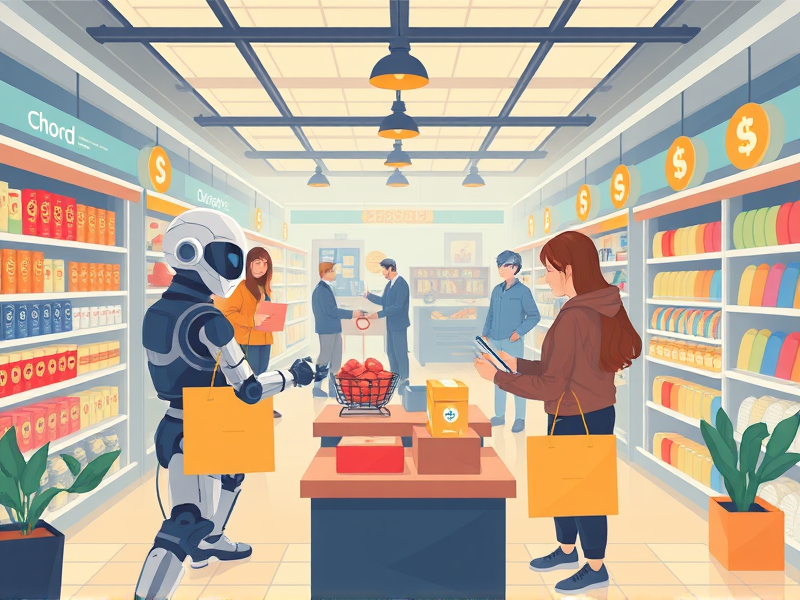
Some companies like Amazon are taking steps to counteract this issue. For example, they block third-party bots, including AI agents, from interacting with their platforms. In some cases, they even resort to legal action, as demonstrated in the instance where Amazon sought to prevent Perplexity’s AI agents from autonomously shopping on Amazon.
However, consumers are becoming more comfortable using AI in retail contexts. This increasing acceptance indicates that agentic commerce is nearing a critical juncture where all stakeholders must define appropriate roles and permissions for AI agents. These considerations could potentially hinder the full adoption of this nascent technology.