

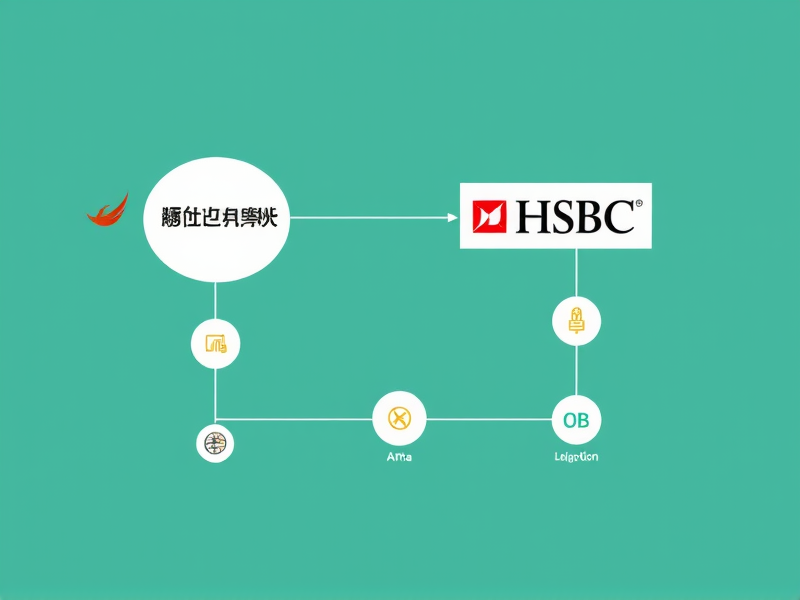
Cross-border payments are stepping into a new era where traditional systems meet digital asset innovation. A significant move forward is being made by Ant International and HSBC in piloting tokenized deposit transfers over the Swift network using ISO 20022.
ISO 20022: Expanding Payment Data
ISO 20022, a messaging protocol that allows organizations to exchange larger payment data compared to current standards, has existed for decades. This pilot marks the first time ISO 20022 is integrated with Swift to facilitate cross-border tokenized deposit transfers.
Initial Trial: Singapore to Hong Kong
In the initial trial, Ant International’s blockchain was merged with HSBC’s tokenized deposit service for a transfer between Singapore and Hong Kong.
Challenges in Cross-Border Payments
The Swift network has significantly enhanced international payment efficiency but still faces substantial hurdles. Historically, cross-border payments relied on the correspondent banking model, creating complex webs of intermediaries leading to delays, high fees, and reduced transparency.
Though various organizations have tried to improve these systems, outcomes have been limited. A recent Financial Stability Board progress report indicates that key performance indicators for international payments have shown only slight improvement over the last two years. The FSB highlights challenges such as the complexity of different regions’ coordination and outdated legacy payment infrastructures.
ISO 20022: Streamlining Payments
The need to overcome these complexities led Swift, along with others, to advocate for ISO 20022. The format’s advanced data capabilities aim to make cross-border payments more efficient by reducing manual interventions and costs.
Delayed payments cost financial institutions over $1.6 billion annually due to extensive investigations which can take days. ISO 20022 also offers insights to detect fraud and money laundering, prompting the U.S. Federal Reserve’s transition of its Fedwire Funds Service to ISO 20022. Swift now mandates ISO 20022 as the standard for cross-border payments on its network.
Blockchain in Payments
Swift is driving digital asset technology integration by creating a blockchain-based platform for cross-border transactions, compatible with blockchains supporting stablecoins and tokenized deposits. This aims to provide secure real-time records of bank transactions via smart contracts ensuring compliance, enabling real-time payments.
The Rise of Tokenized Deposits
While this blockchain is still in early stages, Swift’s collaboration could bolster its capabilities. Tokenized deposits are digital representations of regulated bank deposits, backed by FDIC insurance and better suited for highly regulated financial institutions than stablecoins issued by private or public entities.
Firms like Citigroup, the Bank of England, and BNY Mellon have shown interest in tokenized deposits for their potential benefits such as liquidity automation, 24/7 cash sweeps, reduced failed-trade risk, programmable coupons, dividends, repo transactions, and clearing process optimization.