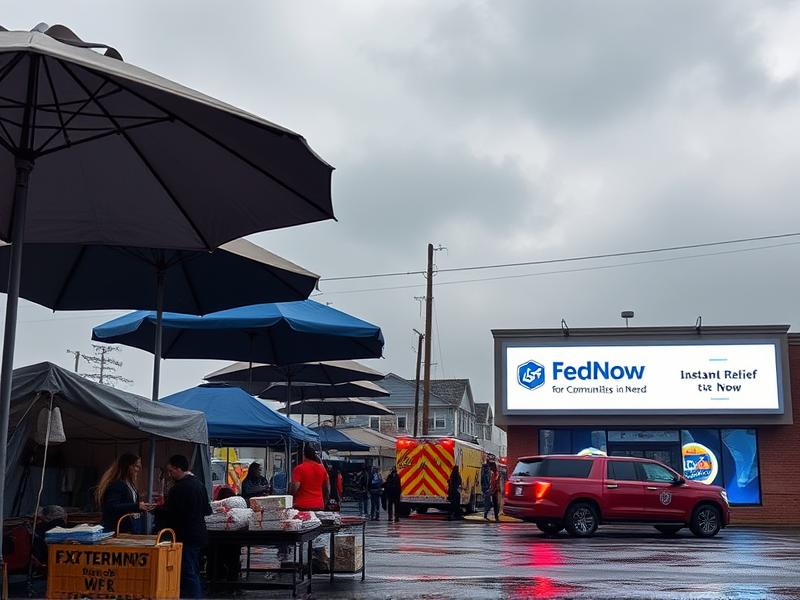
With the deadline for phasing out paper checks rapidly approaching, the U.S. Treasury has leveraged FedNow for disaster relief payments.
Leading the Charge
The Treasury Department was an early adopter of FedNow when it launched two years ago. As part of President Trump’s initiative to eliminate paper checks by the end of this month, alternative payment methods are crucial. The urgency in delivering aid quickly makes FedNow an ideal solution for disaster relief.
A Game-Changer
Mark Gould, Chief Payments Executive at Federal Reserve Financial Services, stated in a prepared statement: “The capacity to receive federal agency disbursements instantly via the FedNow Service will revolutionize how individuals and businesses receive funds, particularly during emergencies where speed is vital.”
Pioneering Payment
CB&S Bank in Russellville, AL, received the first FedNow disaster relief payment. While details such as the timing, amount, and specific disaster were not disclosed by the Fed spokesperson to PaymentsJournal.
Driving Growth
The increasing participation in FedNow will serve as a key differentiator for financial institutions. Banks that join this initiative will gain an edge in accessing emergency funds compared to those who do not.
Ensuring Smooth Transition
To support the transition, vendors are encouraged to update their SAM.gov registration with valid bank account information, ensuring uninterrupted payments as paper checks are phased out. Additionally, individuals can opt for Direct Express, a Treasury-sponsored debit card that facilitates electronic monthly benefit payments.
Addressing Delays
The FedNow initiative aims to improve the speed of disaster relief. Previously, federal disaster areas were declared up to two weeks after a governor’s request during the 1990s and early 2000s. In contrast, recent delays have stretched beyond a month.
Local Efforts
Local communities are taking proactive steps to expedite aid distribution. The Mississippi River Cities and Towns Initiative has launched a program to deliver assistance within 72 hours of a disaster event, involving over 100 river communities from Minnesota to Louisiana.