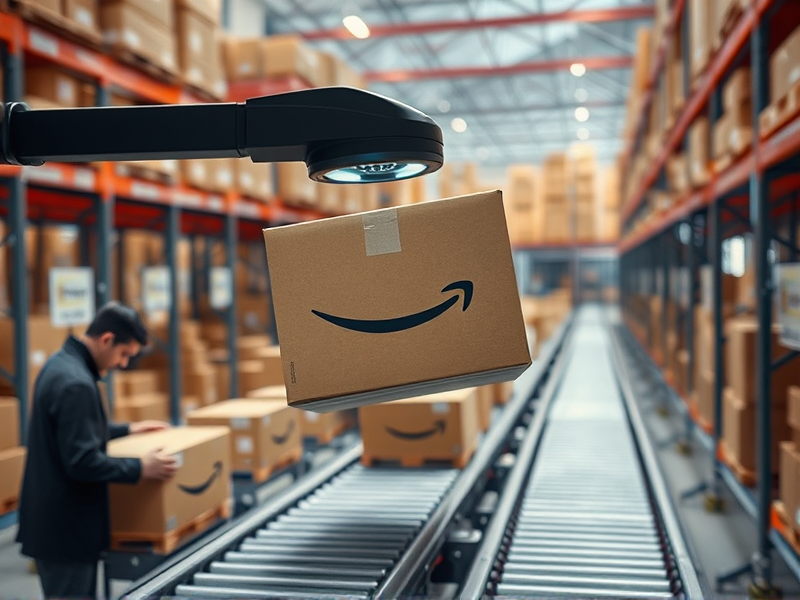
As e-commerce scams escalate, Amazon is investing in a 3D imaging company aimed at addressing the increasing problem of returns fraud.
This issue arises due to a gap within current online shopping processes: after a consumer requests a refund and it is issued once they return the item. However, malicious actors are increasingly sending back empty packages or those lacking the original items while still receiving their refunds.
Amazon’s Investment in Package-Scanning Technology
To tackle this issue, Amazon has backed Cambridge Terahertz, a startup developing package-scanning technology for supply chain and security applications. This tech could inspect returned packages to verify that they contain the correct items before refund processing.
The solution is designed to be compact enough for multiple installation points across Amazon’s supply chain operations.
Data Reflects Growing Concern
According to Appriss Retail data, returns fraud now accounts for $103 billion in losses annually. This problem is just one of many growing concerns for e-commerce merchants as the industry expands.
New Attack Vectors Emerging in E-Commerce
The rise of AI has given cybercriminals new tools to impersonate well-known brands, making their scams more convincing. For instance, Okta discovered that AI can create realistic phishing sites that clone popular brands like Microsoft, Amazon, or eBay with just a few prompts.
Social Media-Driven Scams
Social media has empowered cybercriminals to both study and attack their targets. For example, these criminals might follow social media influencers to learn about products being promoted and then send phishing emails that reference the influencer or product.
Amazon and eBay have faced scams driven by social media.
Direct Cyberattacks on Merchants
In addition, merchants themselves are targeted in direct cyberattacks. A case study involving Marks & Spencer (M&S), a long-standing UK department store chain, illustrates this: after facing a ransomware attack, M&S experienced significant losses and operational disruptions.
A group of hackers infiltrated the company’s systems and threatened to shut down its network unless a ransom was paid. Since M&S refused to comply, it lost access to critical systems and had to halt all e-commerce operations for months.
Technology Solutions Meet Challenges
The constant attacks on merchants’ systems, communications, and customers have pushed the industry towards a tipping point. Many fraud attacks now leverage sophisticated technology powered by organized cybercriminals. This has left many retailers scrambling to adopt their own tech solutions.
Artificial intelligence (AI) is integral in these solutions as it can process large amounts of data and identify suspicious activity, particularly useful in card-not-present environments like e-commerce.
Challenges with AI-Based Solutions
However, relying solely on AI comes with its own set of challenges. If not properly calibrated, AI can flag legitimate transactions as fraudulent, leading to customer dissatisfaction and revenue loss.
In the end, merchants must think creatively and adopt proactive measures to stay ahead in this ongoing battle against fraud. Even giants like Amazon are only now addressing returns fraud after significant losses.
Conclusion
To effectively combat an escalating fraud epidemic, organizations need to embrace more innovative, forward-thinking strategies that go beyond traditional methods.