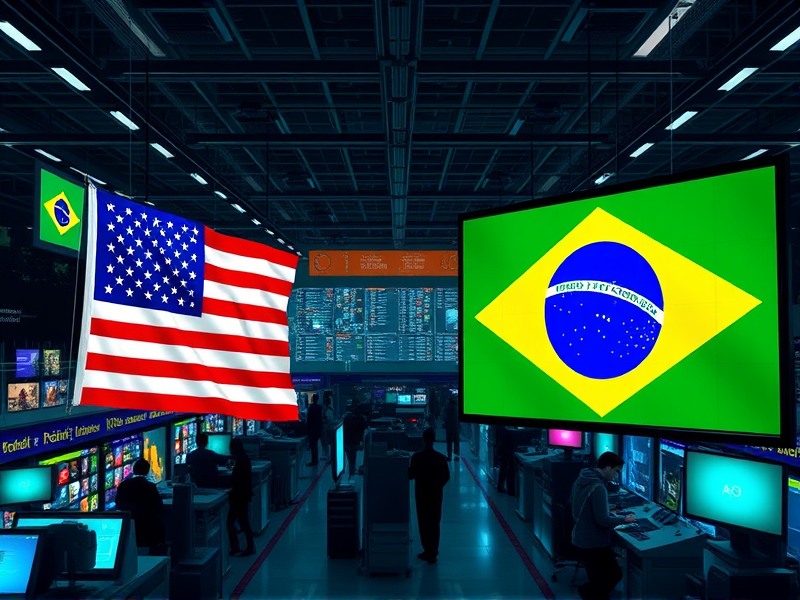
The Office of the United States Trade Representative (USTR) has launched a formal investigation into Brazil’s trade policies and practices.
This inquiry targets whether Brazilian actions, including digital trade measures, tariffs, enforcement standards, and market access, are discriminatory or disproportionately burden US commerce.
A hearing related to this investigation is set for September 3, 2025. Public comments and hearing requests will be accepted until August 18, 2025, with the USTR also seeking consultations with Brazil in line with procedures outlined in the Trade Act.
The investigation was initiated following a directive from the US President and the recommendation of the inter-agency Section 301 Committee. Under Section 302(b) of the Trade Act, the USTR has the authority to self-initiate proceedings in response to potentially unfair foreign trade practices.
Concerns across various policy areas
USTR is examining several Brazilian policies of concern. These include alleged retaliatory actions against US digital platforms, particularly social media firms, related to content moderation issues. Such actions could potentially limit the ability of US firms to operate in Brazil’s digital and electronic payment sectors.
Regarding trade tariffs, the US is concerned about Brazil’s preferential rates offered to some trading partners, which may disadvantage US exporters by distorting competitive conditions.
Other key areas of focus include Brazil’s enforcement of anti-corruption measures and transparency commitments. USTR notes that weak enforcement in these areas could fall short of global standards related to anti-bribery norms.
Intellectual property (IP) rights are also under scrutiny, with USTR arguing that Brazil may not provide adequate protection for IP, which could harm sectors of the US economy dependent on innovation and creative industries.
The ethanol trade has become another contentious issue. While Brazil previously allowed near duty-free access to US ethanol, this policy reportedly changed, with higher tariffs now imposed on American exports.
Finally, the USTR is investigating claims that Brazil’s enforcement of laws aimed at curbing illegal deforestation is inadequate. Such weak enforcement could undermine the global market position of US producers of timber and agricultural products.